A decade ago, the tech industry’s rallying cry was simple: “Move everything to the cloud.” Businesses scrambled to migrate their on-premises servers to massive public cloud providers like Amazon Web Services (AWS), Microsoft Azure, and Google Cloud Platform (GCP). The promise was infinite scalability, reduced IT overhead, and modernization.
However, as we analyze the enterprise landscape in 2026, the reality of cloud computing has proven to be far more nuanced. Companies quickly realized that putting all their digital eggs in one public cloud basket led to unexpected costs, security compliance headaches, and severe vendor lock-in.
To solve these massive infrastructure challenges, enterprise IT has fundamentally shifted its approach. The monolithic “all-in” public cloud migration is dead. In its place, two dominant, highly sophisticated architectural strategies have emerged: the Hybrid Cloud and the Multi-Cloud. While they are often mentioned in the same breath, they serve distinctly different purposes. Understanding the nuances between them is critical for the future of digital business.
Defining the Architecture: What’s the Difference?
Before diving into the strategic advantages of each, we must clearly define what these terms mean in 2026, as the marketing jargon can often blur the lines.
1. The Hybrid Cloud Strategy
A Hybrid Cloud is an environment that seamlessly blends a company’s own private, on-premises infrastructure (their own physical servers) with a public cloud service. The key to a true hybrid cloud is orchestration. The two environments are not just sitting next to each other; they are deeply integrated. Data and applications can move seamlessly between the private and public clouds as business demands fluctuate.
2. The Multi-Cloud Strategy
A Multi-Cloud environment, on the other hand, strictly refers to the use of two or more public cloud providers simultaneously. A company utilizing a multi-cloud strategy doesn’t necessarily maintain its own physical servers. Instead, they might use AWS for their massive data storage, Google Cloud to run their complex artificial intelligence and machine learning models, and Microsoft Azure to host their enterprise productivity software.
The Case for the Hybrid Cloud: Security, Sovereignty, and Cost
Why would a company in 2026 still want to own and maintain expensive physical servers? The answer comes down to three critical factors: security, data sovereignty, and baseline economics.
Strict Regulatory Compliance
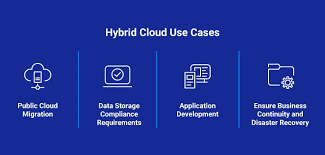
Certain industries, such as healthcare, defense, and high-level finance, are subject to incredibly strict data privacy laws. As global data sovereignty regulations mandate that citizen data must remain within national borders, many organizations simply cannot legally store their most sensitive information on public, multi-national servers. A hybrid cloud allows a hospital to keep highly sensitive patient records locked down on a secure, private, on-premises server, while utilizing the vast computing power of the public cloud to run non-sensitive, daily administrative applications.
Cloud Repatriation and Cost Control During the initial cloud boom, many companies experienced “cloud shock”—opening their monthly AWS or Azure bill to find it was exponentially higher than anticipated. Public clouds charge for data egress (moving data out of the cloud) and dynamic computing spikes. For predictable, heavy, steady-state workloads, renting servers indefinitely is actually more expensive than owning them. This has led to a massive trend of “Cloud Repatriation,” where companies bring predictable workloads back in-house to a private cloud, only bursting into the public cloud during temporary spikes in consumer traffic (like Black Friday e-commerce sales).
The Case for the Multi-Cloud: Best-of-Breed and Resilience
If hybrid cloud is about control, the multi-cloud strategy is about optimization and leverage. In 2026, relying on a single public cloud provider is widely considered a massive operational risk.
1. Evading Vendor Lock-In When a company builds its entire software architecture using the proprietary tools of a single cloud provider, they become trapped. If that provider decides to raise their prices by 20%, the company has no choice but to pay it, as migrating their entire infrastructure to a competitor would take years and cost millions. A multi-cloud strategy relies heavily on containerization technologies like Kubernetes. By packaging software into portable “containers,” developers can easily drag and drop their applications from AWS to Azure to GCP in a matter of hours, giving the business massive negotiating leverage.
2. The “Best-of-Breed” Approach
Not all clouds are created equal. Each “hyperscaler” has distinct specialties. In 2026, Google Cloud is widely recognized as the gold standard for generative AI and data analytics. Microsoft Azure offers unparalleled integration with existing enterprise software environments (like Windows and Office). AWS offers the most expansive global footprint and unparalleled scaling capabilities. A multi-cloud strategy allows developers to cherry-pick the absolute best tools from each provider to build the ultimate software stack, rather than settling for a “jack-of-all-trades” compromise.
3. Ultimate Disaster Recovery
Outages happen. Even the most robust public clouds occasionally suffer catastrophic, region-wide failures due to extreme weather or sophisticated cyberattacks. If an e-commerce platform relies entirely on a single cloud, an outage means total paralysis and millions of dollars in lost revenue per hour. A multi-cloud architecture provides the ultimate redundancy. If AWS goes down in the eastern hemisphere, the system can autonomously route global traffic to its backup servers running on Google Cloud, ensuring the end-user never experiences a disruption.
The Challenge: Taming Cloud Complexity
While the benefits are immense, the transition to these advanced cloud architectures introduces a massive new challenge: management complexity. Operating a hybrid or multi-cloud environment requires IT teams to master multiple security protocols, billing structures, and deployment pipelines.
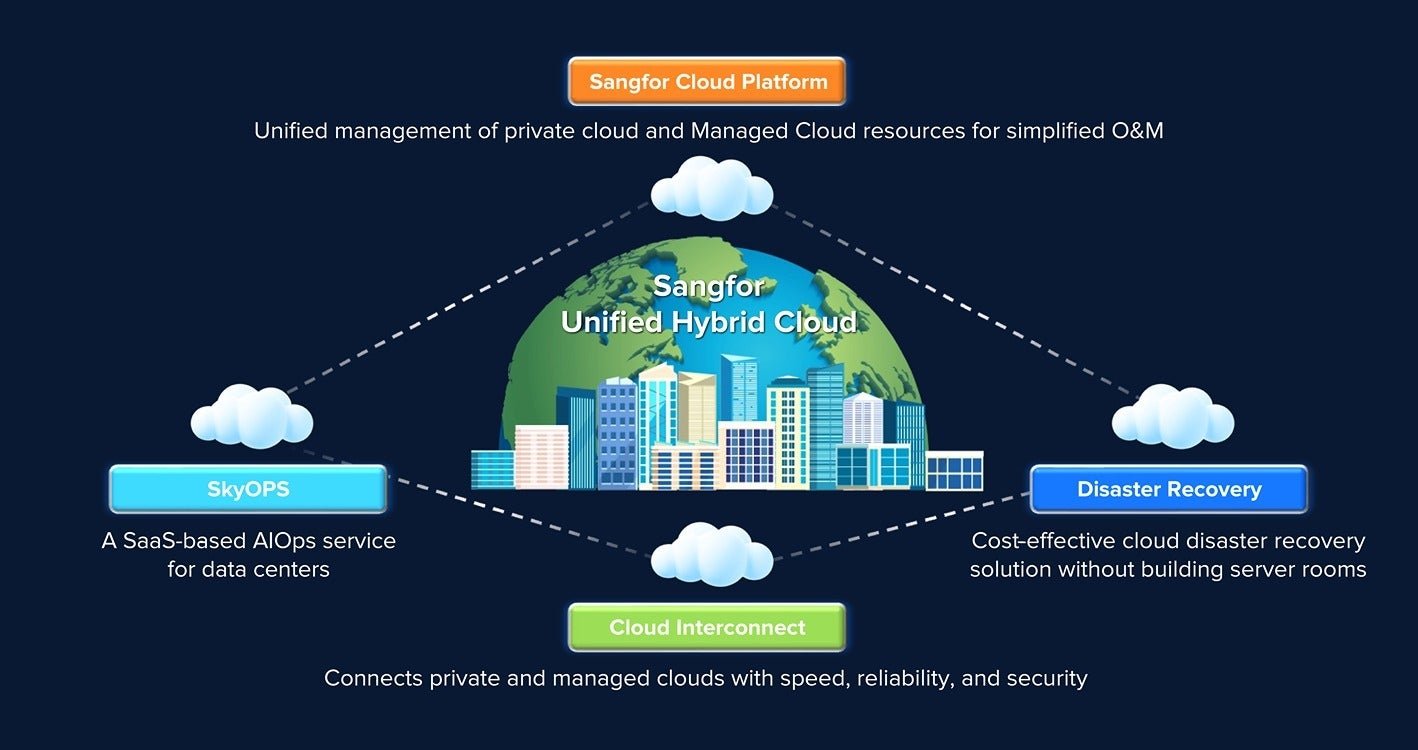
To solve this, the tech industry has spawned an entirely new discipline known as FinOps (Financial Operations). FinOps teams utilize advanced AI tools to continuously monitor multi-cloud environments, analyzing millions of data points to identify wasted cloud spend, unused virtual machines, and inefficient code. Furthermore, Cross-Cloud Control Planes—centralized software dashboards that allow administrators to view and manage their private servers, AWS, and Azure resources through a single pane of glass—have become mandatory enterprise tools.
Conclusion: The Convergence into Hybrid Multi-Cloud
The debate between Hybrid Cloud and Multi-Cloud is ultimately a false dichotomy. In 2026, the most successful, resilient, and cost-effective organizations are actually deploying a Hybrid Multi-Cloud strategy.
They maintain private infrastructure for absolute data security and baseline cost control (Hybrid), while simultaneously utilizing multiple public cloud providers (Multi-Cloud) to access cutting-edge AI tools and ensure global redundancy. The cloud is no longer a destination you migrate to; it is an operating model. By masterfully orchestrating workloads across diverse environments, modern enterprises are building digital foundations that are virtually indestructible, limitlessly scalable, and primed for the next generation of technological innovation.
