For the first six decades of space exploration, the cosmos was an exclusive club. The sheer cost of building rockets, training astronauts, and launching payloads meant that only the wealthiest national governments—NASA, Roscosmos, and the ESA—could afford to participate. Space was a theater for geopolitical maneuvering and purely scientific discovery.
Today, as we look to the stars in 2026, that paradigm has been completely shattered. We have entered the era of the commercial space economy. Private enterprise has not only caught up to government agencies; it has surpassed them in launch cadence, reusable rocket technology, and ambition. The new frontier is open for business, and the primary real estate being developed is a region just a few hundred miles above our heads: Low Earth Orbit (LEO).
Understanding the Low Earth Orbit Economy
Low Earth Orbit is an area of space ranging from roughly 100 miles (160 km) to 1,200 miles (2,000 km) above the Earth’s surface. Because it is relatively close, it takes significantly less fuel to reach LEO compared to deep space destinations like the Moon or Mars.
The commercialization of this zone was triggered by a single, revolutionary breakthrough: reusable rockets. By landing and reusing the first stage of orbital launch vehicles, companies like SpaceX and Rocket Lab have slashed the cost of sending a kilogram of payload into space by over 90%. Space is no longer cost-prohibitive. This dramatic reduction in launch costs has birthed a multi-billion-dollar LEO economy, transforming space from a scientific vacuum into an industrial park.
The End of the Digital Divide: Satellite Megaconstellations
The most immediate and visible impact of the commercial space race is the deployment of satellite “megaconstellations.” In the past, satellite internet relied on massive, expensive machines parked in Geostationary Orbit (GEO), over 22,000 miles away. This immense distance created terrible latency (lag), making satellite internet virtually unusable for modern tasks like video conferencing or online gaming.
The modern approach utilizes thousands of small, mass-produced satellites flying in a tight grid in LEO, only 300 miles above the ground. Systems like SpaceX’s Starlink and Amazon’s Project Kuiper are currently blanketing the globe. Because the satellites are so close to Earth, the latency rivals traditional fiber-optic cables.
In 2026, this technology is actively bridging the global digital divide. Remote villages, deep-sea shipping vessels, and rural agricultural hubs now have access to high-speed, low-latency gigabit internet. This is fundamentally altering global economics, bringing millions of previously isolated people into the digital workforce and enabling real-time global supply chain tracking from anywhere on the planet.
The Factory in the Sky: In-Space Manufacturing
Perhaps the most exciting sector of the LEO economy is something most consumers never think about: manufacturing.
Gravity is a massive constraint on Earth-based manufacturing. It causes heavier elements to sink, lighter elements to rise, and limits the perfection of crystalline structures. The microgravity environment of Low Earth Orbit removes this constraint, allowing for the creation of materials that are literally impossible to manufacture on Earth.
1. Next-Generation Fiber Optics
One of the most promising in-space products is ZBLAN, a heavy-metal fluoride glass used for fiber optics. When manufactured on Earth, gravity causes microscopic crystals to form in the glass, degrading the signal. When pulled in the microgravity of LEO, ZBLAN forms flawlessly. This space-made fiber optic cable is exponentially more efficient than traditional silica fiber, promising to drastically accelerate global internet backbones and quantum communication networks.
2. Biomedical Breakthroughs
The pharmaceutical and medical industries are heavily investing in space labs. In microgravity, protein crystals grow larger and more perfectly than they do on Earth, allowing researchers to study their structures with unprecedented clarity to design highly targeted drugs for diseases like cancer and Alzheimer’s. Furthermore, bio-printing (3D printing human tissue) is far more successful in space. Without gravity collapsing the soft, gel-like cellular structures, companies are actively experimenting with printing viable human organs and retinas in orbit.
The Replacement of the ISS: Commercial Space Stations
The International Space Station (ISS) has been continuously inhabited for over two decades, standing as a marvel of international cooperation. However, the aging station is scheduled to be decommissioned and crashed safely into the ocean by the end of the decade.
NASA and other space agencies are not building a replacement. Instead, they are acting as “anchor tenants,” paying private companies to build and operate commercial space stations.
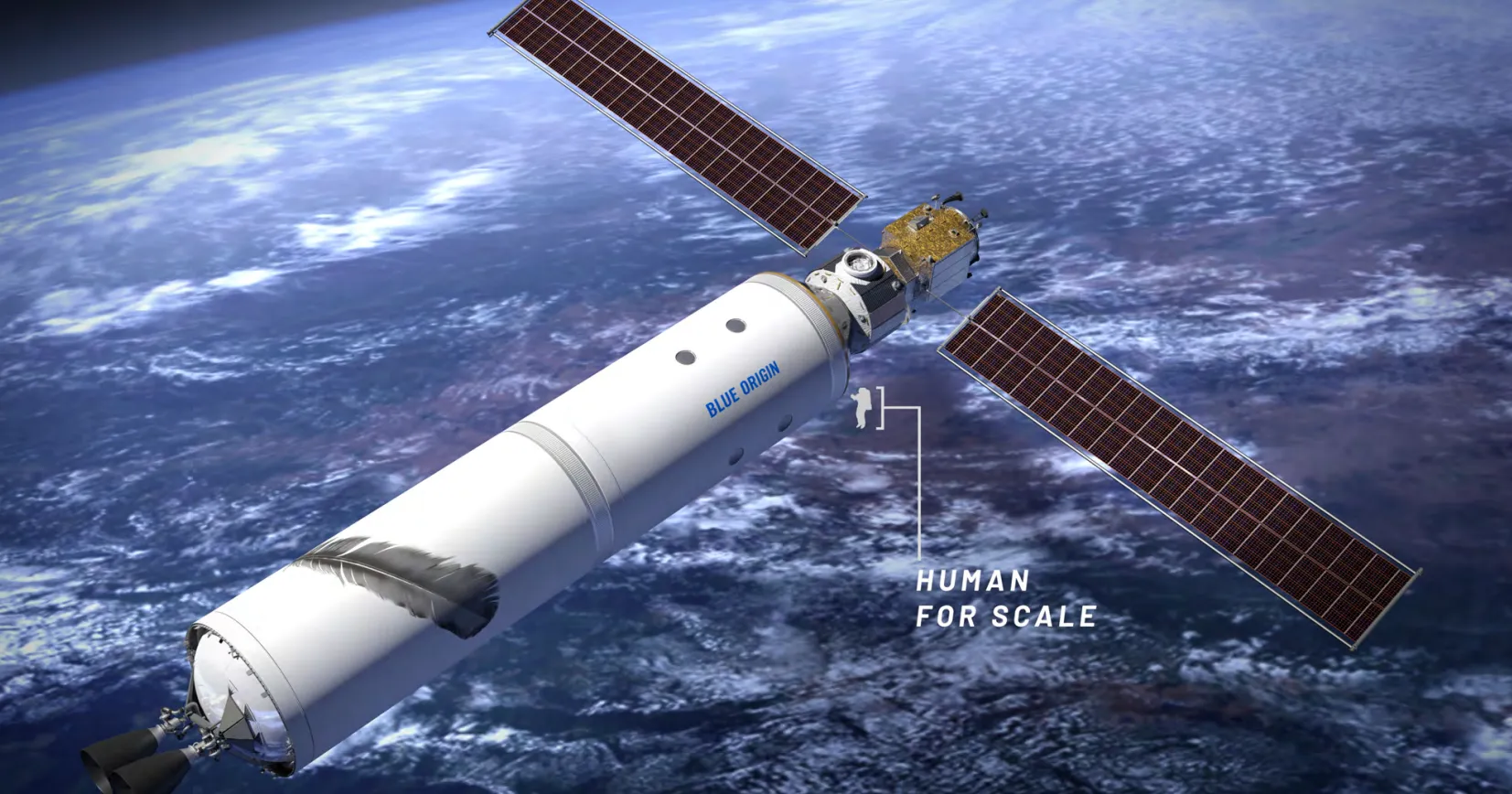
Companies like Axiom Space, Blue Origin (with their Orbital Reef concept), and Voyager Space are rapidly developing modular, commercial habitats. These new stations will serve multiple purposes. They will house government astronauts conducting basic research, but they will also feature orbital factories for in-space manufacturing, private laboratories leased by pharmaceutical giants, and luxury accommodations for the burgeoning space tourism industry.
The Dark Side of Development: Space Debris and Kessler Syndrome
The rapid industrialization of LEO is not without severe risks. The biggest threat to the commercial space economy is space debris.
There are currently millions of pieces of “space junk”—dead satellites, discarded rocket stages, and tiny flecks of paint—orbiting the Earth at 17,000 miles per hour. At that speed, even a loose screw carries the kinetic energy of a hand grenade. As companies launch thousands of new satellites, the orbital highways are becoming dangerously congested.
The nightmare scenario is the “Kessler Syndrome”—a theoretical cascading chain reaction where a single collision creates a cloud of debris that destroys more satellites, creating more debris, until Low Earth Orbit becomes completely impassable and unusable for generations.
To combat this, the tech industry is developing advanced AI radar systems to autonomouslytrack debris and maneuver active satellites out of the way. Startups are even launching “garbage truck” satellites equipped with nets, harpoons, and magnetic tethers to actively capture and de-orbit large pieces of dangerous junk. Strict international regulations regarding satellite disposal and end-of-life de-orbiting are becoming mandatory for anyone wanting to participate in the space economy.
Conclusion: A New Era of Human Enterprise
The commercialization of Low Earth Orbit represents a monumental shift in human history. We are no longer just visiting space; we are moving in, setting up shop, and building an economy that transcends our planetary borders.
From bridging the digital divide with high-speed satellite internet to manufacturing life-saving drugs in zero gravity, the space tech of 2026 is providing tangible, massive benefits to the people still standing on the ground. The final frontier has transformed into the next great economic frontier, and the innovations born in the silence of orbit will continue to echo across every industry on Earth.
